

Graded Card Display Case Price Guide: Entry-Level to Museum-Grade (2026)
Quality graded card display cases usually range from $15 for basic acrylic stands to $300+ for premium, museum-style wall or tabletop displays, depending on materials, UV protection, capacity, and overall build quality.
If you’ve been in the hobby long enough, you’ve probably noticed something weird: two display cases that look almost identical can be priced wildly differently. One’s $59 on Amazon, the other’s pushing $200, and both swear they’re “UV protected” and “collector grade.” That price gap isn’t random and it’s not just branding either.
Graded cards have quietly shifted from “nice-to-have” collectibles to investment pieces, personal artifacts, and straight-up décor. Whether it’s a PSA 10 Pokémon card you waited years to pull, a vintage sports slab you finally landed, or a PC card that just hits, putting it back in a box feels wrong. Displaying it is part of the experience now.
The problem? The display market exploded faster than standards did. You’ve got everything from cheap acrylic stands to fully acrylic, museum-style cases that are all labeled as “premium,” all claiming protection, and all priced very differently. Some are genuinely great value. Others… not so much.
In this guide, we’ll break down what graded card display cases actually cost, why they cost that much, and how to think about price ranges without getting burned. No hype, no brand wars; just collector logic, Reddit-level honesty, and enough context so you can spend confidently instead of guessing.
If you’ve ever wondered whether paying more actually gets you more, or where the real jump in quality happens, you’re in the right place.
What Actually Drives the Price of a Graded Card Display Case

Before we talk numbers, we need to talk why. Because the jump from $40 to $140 isn’t random. There are real differences and sometimes fake ones dressed up as features.
Here’s what actually drives cost.
1. Materials (And No, Not All “Acrylic” Is Equal)
On paper, everything says “acrylic.” In reality:
- Thin plexiglass that flexes when you press it is not the same as thick, polished acrylic panels.
- MDF + acrylic combos are common in mid-range wall cases.
- Fully acrylic builds (front, body, structure) usually cost more because machining and finishing them cleanly is harder.
- Aluminum or reinforced frames add durability and cost.
A $60 wall cabinet often uses thinner acrylic and basic wood backing. A $150+ case usually has thicker panels, better edge finishing, and tighter tolerances.
Collectors notice this stuff immediately. Especially once you’ve opened and closed a few.
2. UV Protection (Real vs Marketing)
This is where things get murky.
A lot of cases advertise “UV protection,” but:
- Some use basic acrylic that filters minimal UV.
- Some actually use UV-rated panels (often labeled 95–98% UV protection).
- Some don’t specify the percentage at all.
If you’re displaying near windows or in bright rooms, this matters. If you’re in a low-light office, it might matter less but it’s still part of long-term preservation.
How Elegant Lighting Enhances the Beauty of Your Collectibles
3. Capacity vs Footprint
A 3-card display and a 36-card wall cabinet are not just scaled versions of each other.
Higher-capacity cases require:
- Structural reinforcement
- Better mounting hardware
- More precise shelf spacing
- Stronger hinges and latches
The jump from 9-card to 35-card isn’t just material, it’s engineering. And if it’s poorly engineered, you’ll feel it the moment shelves sag or the door misaligns.
Reddit threads are full of this exact complaint.
4. Hardware Quality (The Silent Dealbreaker)
This is the stuff you don’t think about until it fails:
- Weak hinges
- Cheap locking latches
- Shelves secured with tiny brad nails
- Magnetic doors that lose alignment
Mid-range cases often look identical in photos, but hardware quality is where price differences show up fast.
A case that stays square on the wall for five years costs more to manufacture than one that survives six months.
5. Finishing & Tolerances
This is where premium cases separate themselves:
- Clean edge polishing
- Hidden magnets instead of visible hardware
- Tight slab fit without rattle
- No visible glue residue or uneven cuts
It’s subtle. But once you see it, you can’t unsee it.
That “museum” look everyone talks about? It’s mostly finishing quality.
Entry-Level Display Options ($10–$40)

This is the “just get it out of the box and onto something” tier.
If you’re new to graded cards, rotating pieces for Instagram, or just want your favorites on a desk instead of buried in a drawer then this range absolutely works.
You’ll usually find:
- Single-card acrylic slab stands
- 3–6 card tabletop racks
- Basic magnetic slab holders
- Etsy / small-shop printed stands
- Simple wall mounts with minimal framing
For $10–$25, you’re typically getting a stand, not a protective environment. That’s an important distinction. These elevate the card visually but they don’t shield it from light, dust, or impact the way a cabinet does.
In the $25–$40 range, you start seeing:
- Small framed displays
- Basic multi-card acrylic panels
- Lightweight wall-mounted options
They look clean. They photograph well. They’re fun for showing off your PC.
But here’s the honest collector take.
If you:
- Display near windows
- Have high-value slabs
- Care about long-term UV exposure
- Don’t want to see micro-scratches after cleaning
You’ll probably outgrow this tier.
That doesn’t mean it’s bad. It just means it’s temporary for many collectors.
A lot of people start here. Especially when they’re testing how they want to display their collection. It’s low commitment. Low risk. And honestly, some single-slab acrylic stands look great on a desk.
Where this tier becomes a false economy is when someone buys five separate $30 stands instead of investing in a structured display system from the start.
That’s usually when the “I should’ve just bought the better one first” moment hits.
If you plan to grow your display over time, this is where it helps to think ahead. Choosing the Right Display Case: A Comprehensive Guide.
Mid-Range Display Cases ($50–$120)
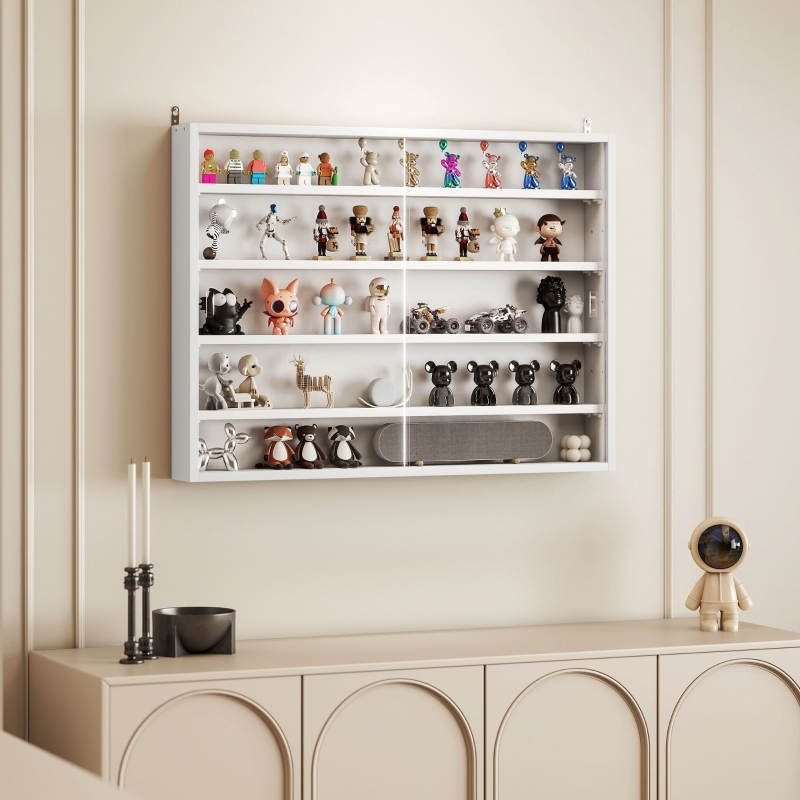
This is the sweet spot for the hobby.
If you’ve browsed Amazon, Etsy, card show vendors, or brands like Vaulted or Pennzoni-style cabinets, you’ve seen this tier everywhere. Wall-mounted cases holding anywhere from 10 to 36 graded slabs dominate this price range.
And for good reason.
In this bracket, you typically get:
- Wall-mounted cabinet-style displays
- MDF or wood frame construction
- Acrylic or plexiglass front panels
- UV claims (often 95–98%)
- Lockable doors
- Grooved or slotted shelves
This is where display shifts from “desk accessory” to “room statement.”
For $60–$90, you’re usually looking at the classic 35–36 slab wall cabinet. Black frame. Clear front. Locking latch. Grooved shelves. It’s the one Reddit recommends every other thread and also roasts every other thread.
Here’s the balanced take.
What you’re getting right:
- Massive visual impact for the money
- Solid organization
- Easy mounting
- Good value per card displayed
What you’re compromising on:
- Thinner acrylic that scratches easier than advertised
- Hardware that feels fine… until it doesn’t
- Latches that are more symbolic than secure
- Shelves that may loosen over time
Some collectors have zero issues for years. Others report hinges loosening, shelves popping, or slight frame warping.
It’s not that these are bad. It’s that this tier is mass-manufactured and optimized for price, not longevity.
You also start seeing LED versions in the $100–$120 range. These look incredible in photos and can absolutely elevate a setup but lighting introduces its own considerations, especially heat and light exposure. 16 Best Practices for Displaying & Preserving Collectibles.
If you’re displaying 20–100 slabs and want something cohesive without breaking the bank, this tier makes sense. It’s practical. It works. It looks good on the wall.
The key is managing expectations.
These are display-first solutions, not museum-grade preservation systems.
And for a lot of collectors, that’s completely fine.
Premium & Museum-Style Displays ($120–$300+)

This is the tier where display stops being functional and starts being intentional.
You’re no longer just mounting slabs on a wall. You’re curating a presentation.
In this price range, you typically see:
- Fully acrylic construction (not MDF + acrylic)
- Thicker panels (often 5–6mm+)
- Hidden or embedded magnets
- Precision slab cutouts
- Carbon fiber or aluminum finishes
- Tabletop display systems designed like trophies
This is where brands like Vaulted and boutique slab-display makers live. You’re paying for machining, finishing, and tolerances, not just material.
And the difference is noticeable.
When you open a premium display:
- The door alignment is tight
- The slabs don’t rattle
- Edges are polished, not rough-cut
- Magnets feel deliberate, not flimsy
It feels engineered instead of assembled.
That “museum look” people talk about? It’s mostly about two things:
- Clean finishing
- Visual minimalism
No visible hardware. No chunky latches. No obvious fasteners. Just slab, acrylic, and presentation.
Now here’s the honest collector question:
Is it worth it?
It depends on what you’re displaying.
If it’s:
- A PSA 10 grail
- A 1-of-1 auto
- A vintage Mantle
- A Pokémon Illustrator-level flex
Spending $150–$300 to protect and showcase it makes sense. The display becomes part of the value perception.
If it’s 40 mid-tier slabs? Probably not necessary.
This tier is about intention. It’s for:
- Personal collections (PC) you’ll never sell
- Statement pieces
- Long-term wall installations
- Collectors who care about aesthetic cohesion
You’ll also see higher-grade UV acrylic in this range. Not always, but more commonly. If UV exposure is a real concern in your setup, this tier tends to take it more seriously.
What Makes a Display Case High-Quality? Key Features to Look For
One more thing collectors don’t always talk about:
Diminishing returns.
The jump from $30 to $80 is huge in quality.
The jump from $80 to $150 is noticeable.
The jump from $150 to $300 is subtle.
Premium displays aren’t about necessity. They’re about refinement.
And refinement costs.
Wall Display vs Tabletop vs Storage: How Price Changes by Use Case

Collectors often shop by price first.
But it’s smarter to shop by purpose.
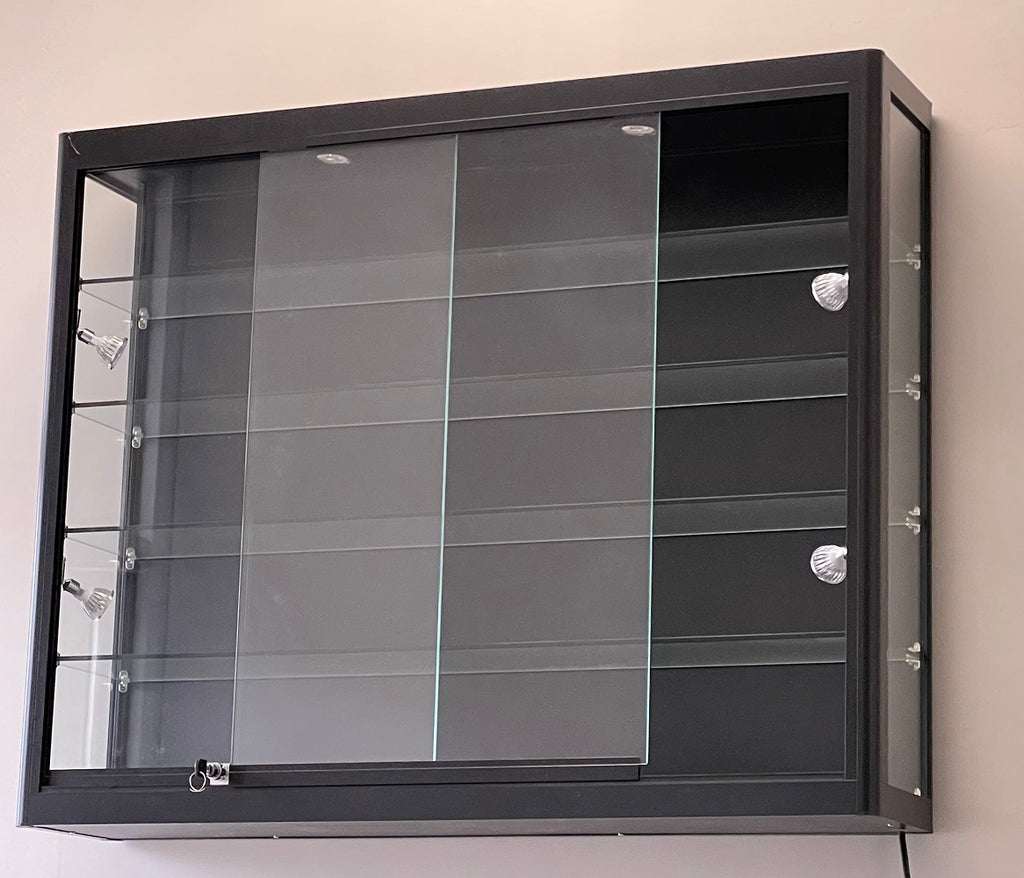
Wall Displays
Wall displays are about impact.
They:
- Turn slabs into décor
- Create a focal point in a room
- Organize larger collections visually
Price shifts upward here because you need:
- Structural support
- Mounting hardware
- Door systems
- Alignment precision
The bigger the case, the more engineering matters. Cheap wall displays can sag or misalign over time. Higher-end wall systems invest more in rigidity and tolerances.
If your goal is “this room screams collector,” wall displays are usually worth spending more on.
Tabletop Displays
Tabletop setups are about flexibility.
They:
- Work great for rotating slabs
- Photograph beautifully
- Feel more personal and intentional
- Take up zero wall space
You’ll often see more premium finishing in tabletop systems because they’re closer to eye level. Any imperfection is noticeable.
Smaller footprint usually means higher price per slab displayed but also higher aesthetic control.
If you enjoy swapping cards regularly or creating mini-curated setups, tabletop makes sense.
Storage + Display Hybrids
This is the practical tier.
Think:
- Lockable cabinets
- High-capacity wall cases
- Travel-safe display boxes
These lean more toward storage with visibility, rather than presentation-first design.
They often sit in the mid-range price bracket because they prioritize:
- Capacity
- Security
- Organization
Over minimalism and aesthetic purity.
If you have 100+ slabs, this category becomes very attractive.
Common Pricing Traps Collectors Fall Into
Collectors don’t usually regret spending money.
They regret spending it wrong.
Here are the traps that show up over and over again in forums, Reddit threads, and Discord groups.
1. Paying for Capacity You’ll Never Fill
That 36-slab wall case looks amazing.
But if you only have 9 cards you actually want displayed, the rest becomes filler. Suddenly you’re buying mid-tier slabs just to “balance the wall.”
Bigger isn’t automatically better. Empty slots can create pressure to spend more; not just on display, but on cards.
Sometimes a smaller, higher-quality display looks stronger than a half-filled monster cabinet.
2. Confusing “UV Protection” With Actual Protection
This one is huge.
A lot of listings say “UV resistant” without specifying:
- Percentage blocked
- Type of acrylic used
- Testing standards
Basic acrylic naturally blocks some UV. That doesn’t mean it’s preservation-grade.
If your display is near a window, this detail matters more than finish or color.
If you’re in a low-light room, you might be overpaying for a feature you don’t fully need.
Know your environment before paying for protection you won’t use.
3. Underestimating Scratch Resistance
Cheap acrylic scratches easily.
Not from dropping it but from wiping dust.
Micro-scratches build up fast. Especially in homes with pets, kids, or frequent cleaning.
The display can look cloudy within a year, even if the cards are fine.
This is where paying slightly more upfront can actually save money long-term.
4. Overpaying for Branding Instead of Materials
Some premium displays justify price with:
- Influencer marketing
- Fancy packaging
- Limited drops
That doesn’t always translate to better acrylic, better hinges, or better machining.
At the same time, the cheapest option isn’t automatically smarter either.
The sweet spot is paying for materials and engineering, not hype.
5. Treating Display Like Storage (Or Vice Versa)
A $70 wall cabinet is not a vault.
A $200 museum-style acrylic display is not a high-capacity storage solution.
Using the wrong type for the wrong purpose leads to disappointment, and usually a second purchase.
That’s the real trap.
So… What Should You Spend?
There’s no single “right” number.
But there is a right number for your stage in the hobby.
Here’s a simple way to think about it.
Casual Collector (1–5 slabs on display)
You’re rotating cards. Testing what you like. Maybe building your PC slowly.
Spending range: $15–$60 total
Single-slab stands or small tabletop displays make sense here.
You don’t need a full cabinet yet. Keep it flexible. Upgrade later if the collection grows.
Growing Collection (10–50 slabs)
You’ve got enough slabs that they deserve structure. You want something cohesive on the wall.
Spending range: $60–$120
This is where mid-range wall cabinets shine.
You’re optimizing for value per slab displayed. It looks good. It’s organized. It doesn’t feel overkill.
Just go in knowing you’re buying a mass-manufactured solution, not heirloom-grade hardware.
Personal Collection (PC Focus)
You have specific slabs you’ll likely never sell. These are emotional anchors.
Spending range: $120–$250
This is where premium tabletop or smaller museum-style wall displays make sense. You’re paying for:
- Clean finishing
- Better tolerances
- Minimal hardware
- A more intentional look
Here, the display becomes part of the story.
High-Value / Sentimental Pieces
If you’re displaying:
- Four-figure slabs
- Vintage grails
- 1-of-1 autos
- Cards tied to personal milestones
Spending $150–$300+ on a refined, UV-rated, well-engineered display is not irrational.
Relative to the card’s value, it’s small insurance and strong presentation.
The Real Rule
A simple collector formula:
If the display costs more than the card and that bothers you simply step down a tier.
If the card costs 5–10x the display and the setup feels underwhelming, time to step up.
Balance matters more than absolute price.
And remember:
The jump from $30 to $80 feels big in quality.
The jump from $80 to $150 feels noticeable.
The jump from $150 to $300 is refinement, not necessity.
Buy based on intention and not hype.
Final Thoughts: Displaying Cards Is Part of the Hobby Now
Five or ten years ago, display felt optional.
Today? It’s part of collecting.
Graded cards aren’t just assets or slabs in a box anymore. They’re art pieces, nostalgia triggers, flexes, milestones, and sometimes investments. How you present them shapes how you experience them.
The price ranges we covered from $15 stands to $300+ museum-style displays aren’t random. They reflect differences in:
- Materials
- Engineering
- UV filtration
- Hardware quality
- Finishing precision
- Intended use
More expensive doesn’t automatically mean better.
Cheaper doesn’t automatically mean smart.
The real decision isn’t “What’s the best display?”
It’s “What kind of collector am I right now?”
If you’re building, experiment cheaply.
If you’re curating, refine intentionally.
If you’re protecting grails, invest accordingly.
A well-chosen display doesn’t just hold your cards, it elevates them.
And when done right, it makes walking into the room feel different.
If you want to go deeper into preservation, UV protection, or how to structure a display that grows with your collection, explore our other graded card display guides, they’re built for collectors thinking long-term.
